
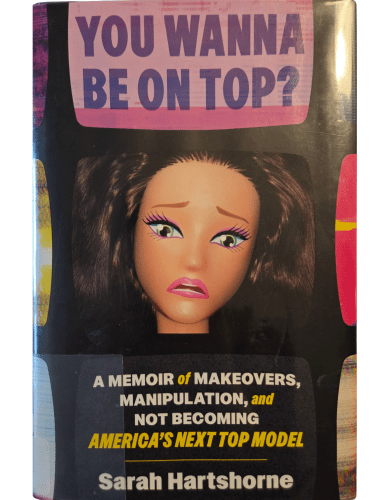
A Memoir of Makeovers, Manipulation, and Not Becoming America’s Next Top Model
For the uninitiated, America’s Next Top Model (ANTM) was a quintessential early-2000s reality competition where women signed up to compete in photoshoots and promotional challenges, all vying to become the next famous face in fashion. Weekly eliminations and interpersonal drama — manufactured or otherwise — made it essential viewing.
Why would you want to read a novel about not winning a reality competition? Plenty of reasons, actually.
As Hartshorne puts it:
“It might nod to the male gaze, but the show is, ultimately, for the girls and the gays.”
The core of the book is her time on America’s Next Top Model, and readers will be glad she risked violating a $5MM NDA to deliver an unvarnished look at what it actually meant to be a reality TV participant. This is what sets her memoir apart from others in the genre — it pulls back the curtain on how a show’s story gets deliberately crafted. Contestants had their clothes thrown away as part of a manufactured scene, only for them to be quietly retrieved from the trash and returned later.
Then there were the rules that governed daily life on set: participants could only speak if they were being recorded, and everyone was required to spend five minutes in a confessional before bed. The show’s producers ensured compliance by prohibiting conversation otherwise — so by the time the cameras rolled, contestants were desperate to talk. To avoid throwing her castmates under the bus, Hartshorne pivoted to marine biology fun facts.
“Did you know that whale sharks are the biggest fish in the ocean, followed by the basking shark?”
Among the memoir’s more eye-opening sections is its focus on what happened once the cameras stopped rolling. The not-so-open secret: it didn’t go well financially for most contestants. Working conditions could be unsafe, with at least one instance of a participant passing out on set without being taken to a hospital. And the participants weren’t paid, nor did they receive residuals.
“Exploitation really hits different when you’re not being paid for it.”
What elevates this beyond a standard tell-all is the wider cultural lens Hartshorne brings alongside the personal recollections. She’s willing to hold both perspectives — crediting the show for promoting a degree of inclusivity that was genuinely ahead of its time, while also reckoning with Gen Z’s pointed criticism of how contestants were treated. It’s a balance that’s rare in the memoir genre, where the tendency is usually to go all-in on grievance or all-in on nostalgia.
Overall, the book is a joy to read. It feels like stumbling onto someone’s diary — intimate and clear-eyed — that gracefully pivots into sharp pop culture critique. Hartshorne’s sardonic, reflective tone keeps you hooked from beginning to end, managing to be both deeply personal and genuinely incisive about the culture that made a show like this possible in the first place. The book is the perfect companion to that Netflix show Reality Check: Inside America’s Next Top Model . Sadly Hartshorn doesn’t make an appearance. But her reflections on ANTM have been perfectly captured in her memoir and nothing more needs to be said.
 Celebrity Book Reviews