Shattering the shiny facade and getting louder with the truth
By Amy Duggar-King
Where Do You Know This Author?
From the TLC series 19 Kids and Counting, where she appeared as the rebellious cousin, the semi–black sheep in a family known for strict rules and polished conformity. On screen, she stood out precisely because she was willing to question, and occasionally laugh at, the Duggar family’s many courtship and behavioral rules. That contrast made her compelling television and ultimately earned her a recurring role.
What Is the Book About?
Holy Disruptor offers a behind-the-scenes look at life on 19 Kids and Counting, filtered through the lens of a family member who never quite fit the mold. The book opens with an origin story of sorts: how her skepticism toward the Duggar rules caught producers’ attention and positioned her as the “rebel” cousin. As she writes,
“I love my cousins and tried to respect the rules, but let’s be honest, there were a lot of them.”
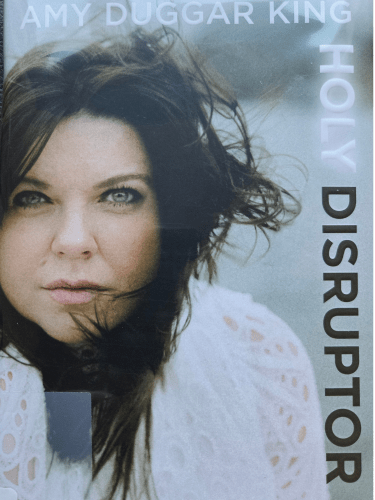
From there, the memoir widens its scope. Duggar King explores her family history and the trauma that shaped it, attempting to explain why her aunt and uncle placed such a high value on order, control, and physical and emotional abstinence. These rules, she argues, were framed as protection—systems designed to prevent harm—but often resulted in repression instead.
Like her cousins before her, she discusses the influence of the Institute in Basic Life Principles (IBLP). Readers are reintroduced to familiar tenets: women are discouraged from independence or self-reliance, expected to cultivate a “gentle and quiet spirit,” and required to maintain long hair as an outward sign of obedience. Duggar King assumes a baseline familiarity with these beliefs, which may leave new readers scrambling for context.
Most Interesting Revelations
Some of the book’s most compelling moments center on money and labor. Duggar recalls being asked to bake a birthday cake for a cousin using her own funds—money she didn’t have—and then being denied reimbursement. When she questioned this, she was told the show was a “ministry” and that she should be grateful for the opportunity. This moment marked her first real reckoning with where the profits from the show were actually going.
Perhaps most poignant is her revelation about how her dreams of country stardom were essentially manufactured by a producer looking for a storyline. This moment of disillusionment feels authentic and personal in a way that much of the book does not.
Where the Book Falls Short
Much of Holy Disruptor revisits ground already covered—often more deeply—by her cousins in Counting the Cost and Becoming Free Indeed. Themes of control, religious extremism, and family loyalty are familiar, and at times the book feels like it is reacting to stories already told rather than carving out new ones.
There are also moments where anecdotal asides feel more gossipy than revelatory: cousins not being allowed to watch commercials during their own TV show, or an uncle equating a breakup with a boyfriend to a moral failure on par with divorce. These details add color, but not always insight.
Is It Worth Your Time?
Holy Disruptor does offer a familiar perspective on the culture of control and perfection portrayed by the Duggar family on television. Its greatest strength lies in the sections where Duggar focuses squarely on her own lived experience—working without pay, performing a curated version of herself for the camera, and slowly recognizing the emotional cost of participation.
That said, the book often feels like it is riding the coattails of narratives that were not entirely hers to tell. If you are choosing where to invest your time, Counting the Cost or Becoming Free Indeed remain the more comprehensive and emotionally grounded accounts.
Ultimately, Holy Disruptor is at its best when it stays personal and reflective, and at its weakest when it leans too heavily on familiar Duggar mythology. It adds another voice to the conversation—but not necessarily the definitive one.
 Celebrity Book Reviews