
Authors: Robin R Means Coleman, PHD and Mark H. Harris.
Publisher: Simon and Schuster sagapress
I remember the first time I saw it: I was watching Jurassic Park, the original movie that came out in 1993. What may be forgotten among visions of brontosaurus, triceratops, velociraptors, and a chase by a T-Rex, was the first death of the movie. A crew surrounds a mysterious box, with an unknown creature screeching inside. A mistake happens, and one of the crew slips, and despite the whaling of the foreman to ‘Shoot her!’ the crew member perishes. Indeed, the black guy died first.
This is not an isolated incident. As Means Coleman and Harris will point out, this cliche is part of a long history of black representation in film that existed before Jurassic Park and continued well into the decades of film that followed.
What is the Book About
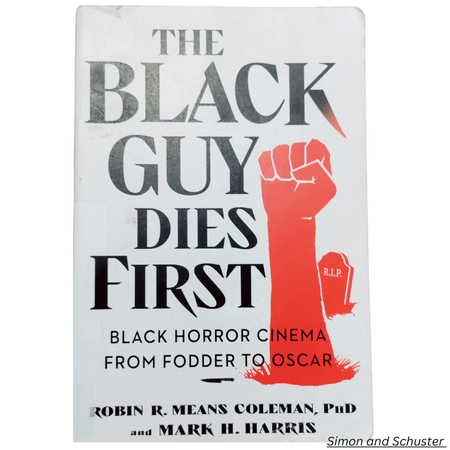
‘The Black Guy Dies First’ offers a thoughtful and subversive exploration of Black horror, examining how the genre reflects and shapes broader cultural narratives. The authors trace the origins of Black horror cinema, critically analyzing iconic films from Night of the Living Dead to Get Out. The book dives deep into the recurring roles of Black actors and provides a nuanced analysis of how these portrayals have evolved over time, shedding light on the specific genres Black horror has inhabited.
The book is structured into chapters that dissect various horror tropes commonly found in Black cinema—such as the intersections of horror with religion or comedy. These sections highlight the shifting landscape of Black representation throughout cinematic history.
The book is also filled with trivia-worthy facts, like: Can you name a Black Oscar winner who died in a horror film? (Octavia Spencer, for one). And did you know the original Predator was played by a Black actor? Particularly engaging are the top ten lists, like “How to Survive a Horror Movie,” with gems like the #2 method: Learn Voodoo.
Most importantly the book answers the burning question ‘Does the Black guy die first?’ No, but according to the book, the mortality rate for Black characters in a movie is 45%.
Is it Worth Your Time?
The book truly shines when the authors embrace the fun of the genre, especially in sections like how a Black character can survive a horror movie. Their enthusiasm for Black horror is infectious and makes you appreciate films that are often dismissed or overlooked. However, at times the book can get bogged down in excessive details, listing nearly every movie and trope imaginable. Occasionally, attempts to tie these films to larger cultural shifts feel forced. For instance, the suggestion that the rise of demonic possession films in the 2010s reflected a shift away from social commentary films like The Purge, as a response to volatile race relations, seems to overlook the simpler explanation that audiences may have just tired of a specific genre.
This is a great read for film lovers and anyone interested in learning more about an important chapter in Black history. If nothing else, it will give you plenty of fascinating conversation starters for Black History Month and beyond.
Photo Credit: Simon and Schuster
 Celebrity Book Reviews